
maandag 12 september 2011
Peter Blom
The managing director of Triodos Bank said in an interview this weekend:
"The real crisis today is not the current crisis in Europe or the debt crisis in the USA, the real crisis today is the lack of space we have on planet earth to fulfill our debts. Interests are low, but what can you lend if there is not enough to create value in the future? Economic value is the value of sufficient raw materials for production, enough food and enough water. We can no longer prevail 'more, more, more'; we have to face the reality. Therefore it is very important that sustainable development is encouraged. By companies as well as governments. It is the only way to move on."
Long-term thinking, that's what it's all about. With a sense of responsibility for those who suffer most on our planet, for future generations and for ourselves.


dinsdag 6 september 2011
Plastic


maandag 5 september 2011
Afropolitans
In Trouw this weekend I read an interesting article about Afropolitans: young, cosmopolitan people with African roots who are the messengers of a positive development of the African continent. Among them entrepreneurs, musicians, fashion people, scientists etcetera. They are rapidly changing the negative image of Africa that's mainstream. They feel connected, strong and they say things like: 'The investments our parents made pay off now; we have jobs and a voice.' Or: 'It's the era of Africa now; it's very relevant to be an African person'.
It's a very positive spirit, and they are determined to change the future. They are aware of the brain drain that many countries in Africa have suffered -all development got stuck because talented people left- and some of them are thinking of moving to the country of their family's origin. Not many of them are interested in politics though, so the question of who takes the responsibility for a fair political leadership is still to be answered. I hope we will hear a lot from them in the near future!
Read this blog by Minna Salami from Finland and Nigeria and Sweden and London.
 (photo by Jean Pierre Jans)

woensdag 31 augustus 2011
Norfolk
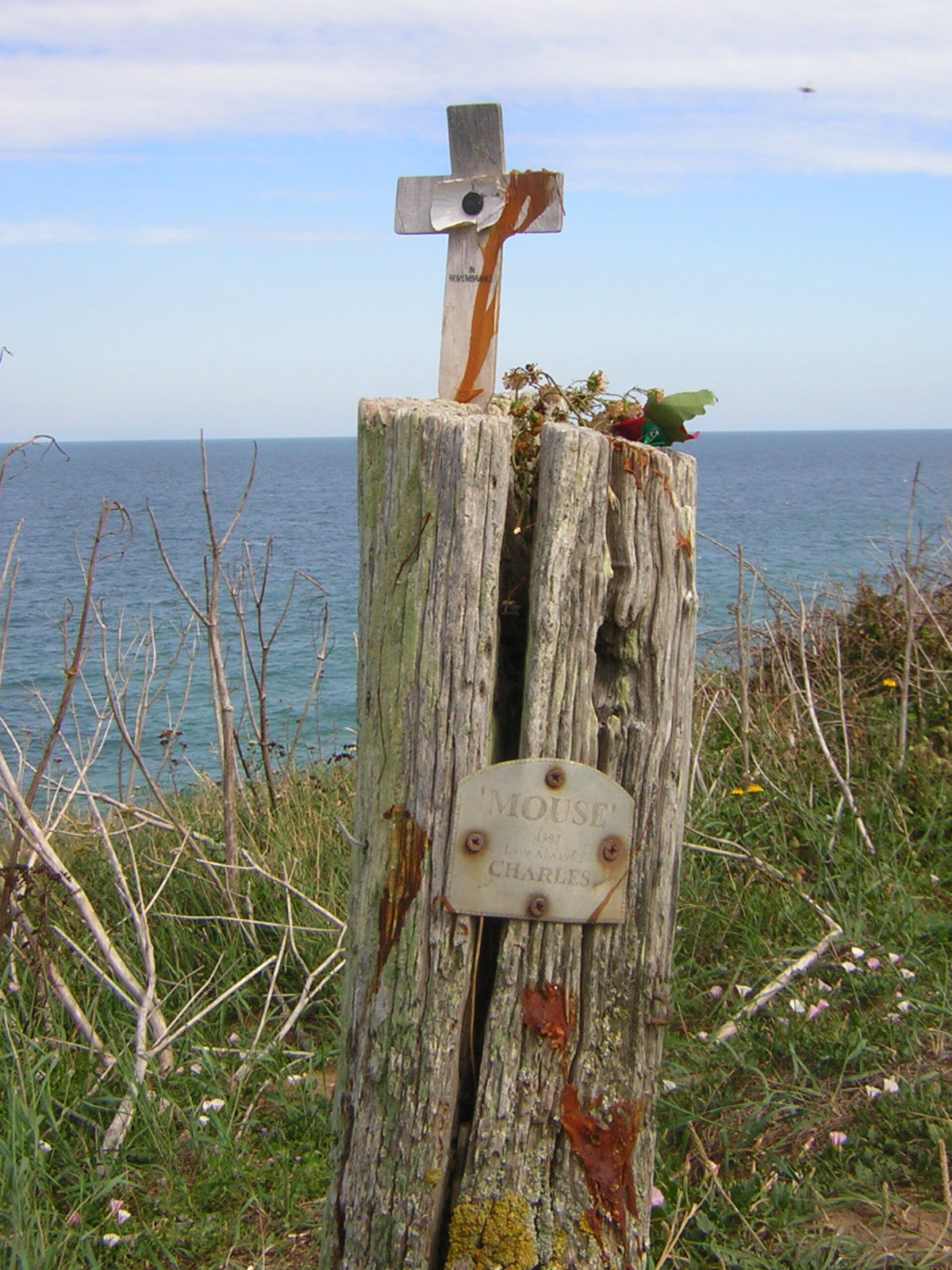


Memory, nature, traditional arcade fun, car boot sales and melancholy. Norfolk had it all this summer. The memorial I encountered on a walk along the coastal path. Who is Morris? Who is Charles? How were they related? Let them be themselves.
Nature in this area is stunning. Fun for the mass and car boot sales are colourful and everywhere. Even at eight in the morning. A house in Blakeney was named Cross Heart Cottage. Like the Dutch saying: every house bears its cross. Live happens at all times. So a cross in the first and the last image; it's the heart that gives value in everything.
donderdag 11 augustus 2011
Wool


Which wool do we use for our wonderful cardigans, shawls and woven fabric? Wool that is produced by hurting the sheep with chemicals, such as much of the merino that comes from Australia? Or hand shorn wool locally produced? The everlasting dilemma; how much is needed and how do we produce? The use of wool for clothing dates back 6000 years. Its insulating and absorbing qualities have made it a very useful fibre. It is also copied in synthetic fibres, but they can never be as good as real wool. Cheaper however, that is.
It takes a year for a sheep to grow a fleece. Then it is shorn off, carded so that the fibres are easier to be used. Then it is spun, and either woven into a fabric, knitted or crocheted into a garment. The craft way to do this is very time consuming. Originally this was done next to all the other work on a farm, after the industrial revolution it became possible to do all this on machines. Which made garments cheaper. Good in one way of course; more affordable for everyone.
But it has gone out of hand. The clothing industry that is. As a result wool has lost its value and is often destroyed on farms. Sheep need to be shorn, but the market price for wool is so low it is cheaper for farmers to destroy the wool rather than sell it.
Only the better brands such as Rowan have their wool from local (British) farmers. I like working with their organic wool which is also organically dyed. I'm also happy to have found some farmers from whom I can buy fleeces for spinning myself or use as a filler for my knitted collection items. So wouldn't it be good if all designers and crafters that love wool go to the farmers and collect the wool before it is thrown away? And we should reuse recycled wool as well!
The amazing sense of the utterly natural product, the many possibilities to use it, the smell, the heritage.... it's my favourite fibre.

In the previous issue of Bloom (from which the images are derived) the mohair wool was celebrated. It's rare and not easy to produce, we should not forget that. But as long as it's don fair and organic it's fine .
dinsdag 9 augustus 2011
Urban Green


While cycling around in Berlin last week we came across the most amazing patch of urban green I've ever seen. Tempelhof flughaven. Originally built in 1890, the airport functioned as 'gateway to heaven' during the division of Berlin for West Berliners to leave the city or country, it is now a wide open space. Almost unreal as far and wide the view is. The buildings are still unused so they look creepy but also radiate a prospective future. Ideas start flowing as you see them. But the landing strips, the grasses, the roads; all is to be used by Berlin citizens. And they do! They cycle, run, play, barbecue in designated areas, have a beer in the 'Biergarten', fly kites, plant their flowers in their allotments, skate and watch. What a potential! 19 Projects are selected to help develop the area, and the 2015 flower show will be held in this 21st century space. Berlin made a leading example with this area. Sustainability, community and nature are key words. Hurray.
(the last photo is by Beau Trincia from New Public Domain who also likes this area)
maandag 8 augustus 2011
The girl who silenced the world

Through the LinkedIn group NPRio+20 someone sent this short film.
A brave girl, who speaks for her generation. She reflects her fear about the future of the planet, and addresses the members of the United Nations. Uncertainty about the future is also reflected in the painting above which I saw last Saturday when I was in the Neue National Galerie in Berlin. The exhibition Modern Times with their amazing collection from 1900 till 1945. In the exhibition design is clearly shown how development in society is paralleled with development in art.
The painting is by Lotte Laserstein and dates from 1930. It's called Abend über Potsdam.
Melancholy, uncertainty, threat and austerity we see, but also togetherness in this. Although every person is turned inwards their emotions, their arrangement as a group still portrays they are joint together.
So now watch the speech of the girl and feel the togetherness we need so desperately.
vrijdag 29 juli 2011
Refugees

I read a figure to think about. In their short essay yesterday in Trouw Cecilia Malstrom and Antonio Guterres, members of the European Commission, mentioned that in the European Union 74.000 refugees are given shelter. In Kenia's Dabaab the number of refugees is 400.000. How can there be complaint about so-called 'mass immigration' in Europe ? Read these figures again.....
And know that a refugee is a human being in need. Especially now in the Horn of Africa.
Jeffrey Sachs said in The Guardian:
The Horn of Africa is the world's most vulnerable region, beset by extreme poverty, hunger and global climate change, notably a drying and warming of the climate during the past quarter century. These scourges are leading to the spread of violence and war, and war is contributing to global instability. Unless we confront the challenges of the Horn of Africa at their root causes – the poverty and vulnerability of pastoralist and agro-pastoralist populations – we will face burgeoning violence in the Horn of Africa, Yemen and beyond. The world would be gravely endangered and the trillions of dollars that would eventually be spent on military responses would prove useless to stem to unrest. Hunger cannot be overcome with violence.
Besides working on a long-term solution we need to act NOW. So don't think your gift is unnecessary, it's very valuable. Donate!
This is the current drought in Somalia, part of the famine problem.
Abonneren op:
Posts (Atom)


